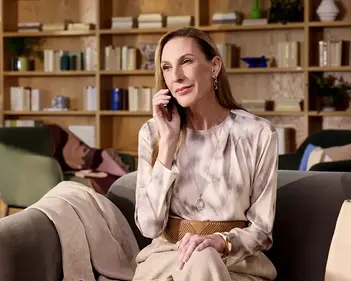





To mark International Women’s Day, we’re shining a light on the brilliant women in our team who are helping to shape the future of science, technology, engineering and mathematics (STEM) — both inside and outside Route 101. We sat down with two of our technical consultants, Carole McNally and Shaunna Ruddick (Wilson), to talk about their journeys into STEM, the challenges and opportunities they have experienced along the way, and why championing women in tech still matters.
What first sparked your interest in STEM?
Carole: It started when my foster brother was given a ZX Spectrum. It came with a programming book, and I was fascinated. I loved the idea that you could type something in and make the machine do something.
That curiosity stuck with me, even though school in the 1980s didn’t really nurture it. “IT” classes were things like how to format a business letter. There wasn’t a visible pathway into tech, especially for women.
In my 20s, in the 1990s, I picked it up again properly. I taught myself how to build a computer from parts because I wanted to understand how it all worked. Then I learned how to build websites using PHP and ran communities on Simple Machines forums. That hands-on experimentation was really my first real education in tech.
From there, it just kept building. I’ve never lost my curiosity about how it all works, and that’s what keeps me interested. I love seeing advances in technology and how it continues to evolve.
Shaunna: In my case, I was never really taught much about STEM at school. It was all fairly basic and, unfortunately, as a young girl I was pushed towards learning textiles and languages, which just wasn’t for me. It almost felt like I had no place in STEM, so I carried that mindset for quite some time.
I decided to go travelling for a few years, hoping to become an actress. When I came back, I was looking for work, and contact centres seemed like a good option for pay, hours, and stability. I started as an agent selling insurance, which was fun, but being in the contact centre environment I began to notice the different departments like Resource Planning, Dialler Analysts, and IT.
I became really interested in the solutions and tools that were being used. I wanted to understand what made them tick and how I could help improve the tools and processes. It turned out I was really good at it, and across different businesses I worked for, I was able to drive key changes that supported agents, colleagues, the business, and customers. That eventually led to my current role as my interest, knowledge, and skills in STEM continued to grow.
What is your role at Route 101, and what do you do day to day?
Carole: I’m a Senior Technical Consultant working across customer experience (CX) platforms and integrations.
Day to day, that means solution design, integrations, Application Programming Interface (API) work, automation, data mapping, troubleshooting complex platform issues, and helping businesses turn operational problems into scalable technical solutions.
A big part of my role is translation: taking business requirements and turning them into something technically sound, and explaining technical constraints in a way that makes commercial sense.
It’s systems thinking as much as it is technology.
Shaunna: My role is a Technical Workforce Engagement Management (WEM) Consultant. Day to day varies for me, but my main priority is providing support and consultancy to our WEM customers, making sure they get the most out of the solutions they have purchased and helping improve internal WEM processes.
I am constantly involved with different technologies and keeping track of their roadmaps, for example Calabrio, Zendesk, and NiCE.
I also pride myself on being able to influence the roadmaps of these technologies so they align with customers’ business goals.
What has your experience been like as a woman working in STEM?
Carole: It’s been mixed — rewarding, challenging, and occasionally exhausting.
I’ve often been the only woman in technical discussions. Early in my career, I sometimes had to prove my technical credibility more than my male peers. You learn quickly to back yourself and to be very clear in how you communicate that confidence.
There have definitely been moments where confidence takes a hit, when you aren’t taken as seriously as your male peers or are overlooked for advancement. I was once told it would be “improper” for me to have “Manager” in my title because the “guys” wouldn’t like it.
But I’ve also learned that competence speaks over time. Consistency builds reputation.
The positive side is that I’ve seen the shift happening. There are more women in technical leadership now, more visibility, and more conversations about inclusion. It’s not finished work, but it is progress.
Shaunna: For me, I’ve spent the last decade in the WEM space, improving my understanding and skills across different technology platforms that are adapting quickly to new ways of working within contact centres — and let’s not forget the buzzword AI.
I have wanted to stay at the top of my game so I can support our clients with the business goals and changes they are facing. Throughout my career, I have faced challenges as a woman in STEM, like many others. I have often been the only woman in the room or on a project, but it has pushed me to develop a strong voice and show others that women can thrive in any environment.
I have also faced challenges that almost broke my confidence and made me feel “unworthy.” I am not ashamed to admit I thought about walking away and not progressing further in this industry. What stopped me was knowing I was good at what I do and passionate about it — and that just being a woman was not going to be a blocker in this industry.
I am proud of the impact I’ve made and excited to keep opening doors for others while continuing to grow my own technical skills.
What’s one misconception about women in STEM that you’d love to challenge?
Carole: That we’re the “exception.”
Women in STEM aren’t rare or unusual; we’ve just historically had less visibility and fewer entry points. Technical thinking isn’t gendered. Curiosity isn’t gendered. Problem-solving isn’t gendered.
Another misconception is that you have to be a hardcore developer to be “real” STEM. Technology needs architects, analysts, integration specialists, product thinkers, consultants, and data specialists. It’s a broad ecosystem.
Have you had any role models or mentors who’ve inspired you along the way?
Carole: I’ve learned from a mix of people — developers, architects, and managers — who valued problem-solving over ego.
Being taught that collaboration in a team is far more important than competition was a really important lesson for me.
Some of the most impactful mentors weren’t formal mentors. They were the people who challenged me technically, trusted me with complex work, and didn’t underestimate me.
That trust early on makes a huge difference.
International Women’s Day is a moment to celebrate progress, but also to recognise the work still to be done. Conversations like these remind us of the importance of visibility, community, and allyship in STEM.
Happy International Women’s Day.