





The contact centre conversation has moved on from what AI can do. The real question is how organisations turn it’s potential into measurable improvements for customers, employees and the business.
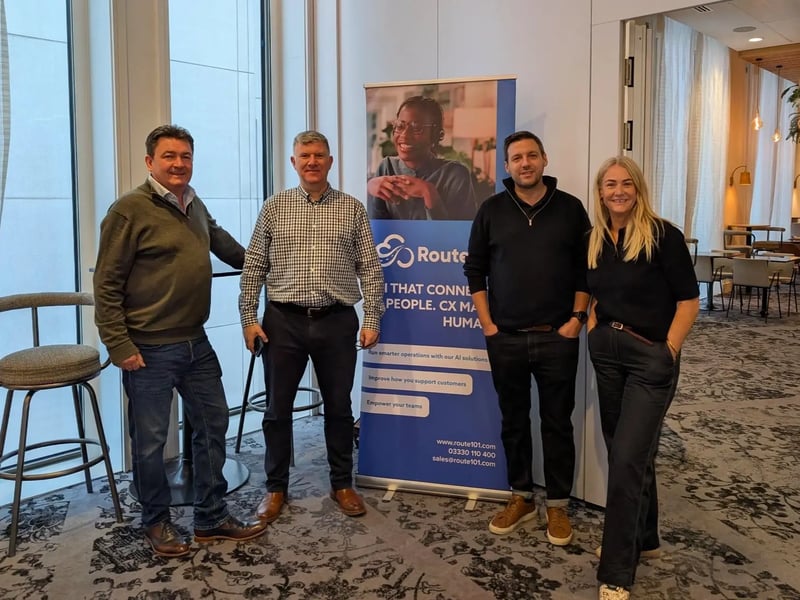
Route 101 sponsored the CCMA Contact Centre Innovation Summit in Manchester, where customer service, technology and transformation leaders explored what practical innovation looks like in 2026.
Across the sessions and roundtables, one message came through clearly: the challenge is no longer understanding what AI can do. It is choosing the right problems, building the right foundations and proving value in a way that earns permission to scale.
1. The organisations moving fastest are not starting with AI
Innovation should begin with the customer journey, not a product shortlist. Before choosing a tool, organisations need to understand where customers struggle, why contact is being generated and which moments carry the greatest value or risk.
The strongest approach combines frontline feedback, customer comments, conversational intelligence and operational data. Together, these signals help teams distinguish a genuine customer problem from an isolated performance issue.
“Don’t call it innovation. Call it friction and remove it.”
Customers do not care whether an easier journey was created by AI, automation, process redesign or a better-informed colleague. They care that it works.
2. The best ideas may already be inside the contact centre
Frontline teams see broken hand-offs, repeated questions, avoidable searches and knowledge gaps every day. Giving advisors a simple route to raise friction points, and involving them in designing improvements, turns the contact centre into a continuous source of customer insight.
Ideas are rarely the scarce resource. Capacity is. Budget, competing priorities and the ability to release people from day-to-day delivery often determine whether an idea progresses. That makes clear ownership, prioritisation and a credible view of return on investment essential.
3. Most organisations do not have an AI problem. They have a maturity problem.
Organisations are adopting AI from very different starting points. Some are establishing reliable transcription and summarisation. Others are using interaction data for insight, automating quality processes, supporting advisors in real time or introducing AI-led customer conversations.
Luke Cuthbertson, Head of CX Consulting at Route 101, frames this as a maturity journey. Business impact can increase as organisations move towards more advanced capabilities, but progress is not simply a matter of adding another tool. Knowledge runs underneath the whole journey.
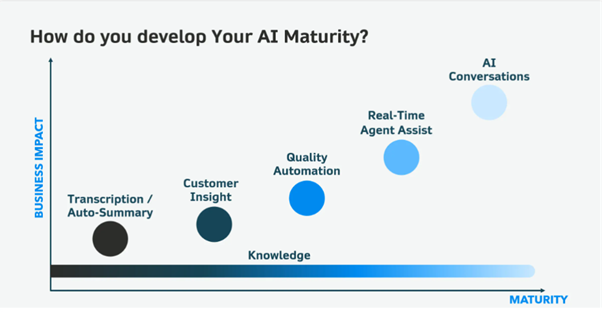
Figure 1. Route 101 AI maturity framework, developed by Luke Cuthbertson.
The sequence will not be identical for every organisation. The important point is that advanced use cases depend on foundations that are easy to underestimate. Jumping straight to conversational AI without reliable knowledge, ownership and feedback loops can amplify inconsistency rather than remove it.
This was a recurring theme throughout the Summit. Many organisations are eager to accelerate AI adoption but are still wrestling with the foundations needed to scale successfully. It's a topic we'll be exploring in more detail in our upcoming webinar, "Are These Adoption Mistakes Derailing Your AI Strategy?", where we'll discuss the common pitfalls we see when organisations attempt to move too quickly from experimentation to enterprise-wide adoption.
4. Knowledge and guardrails turn AI experimentation into business value
AI can only answer, recommend and act with confidence when the information beneath it is accurate, current and governed. When organisations respond to pressure by adding disconnected tools and channels, ownership blurs and complexity builds. AI can magnify that problem if it is treated as a shortcut.
Sustainable progress starts by simplifying the foundations, naming content owners, removing duplicate sources and connecting knowledge to frontline workflows. A sophisticated copilot that surfaces an outdated policy faster is not an improvement.
That does not mean moving slowly. The consistent advice was to experiment in controlled environments, define the problem first and measure a small number of relevant outcomes. Depending on the use case, these could include after-call work, first-contact resolution, quality, containment, customer effort or colleague adoption.
"Move quickly enough to learn, but measure carefully enough to know whether the change is worth scaling."
5. Efficiency is an outcome, not the strategy
Reducing cost or handling time may be valuable, but it does not explain what an organisation is trying to achieve for customers. Efficiency is strongest when it comes from removing duplication, simplifying workflows and reducing effort across the operation, rather than shifting work elsewhere.
The same principle applies to human service. The goal is not to automate every interaction, but to offer useful self-service for simpler needs while using people where empathy, judgement and expertise create the greatest value. As routine work reduces, the remaining interactions are likely to be more complex, making joined-up context, trusted knowledge and real-time guidance even more important.
The big takeaway
"The future of customer experience will be shaped less by the AI tools organisations buy and more by the problems they choose to solve."
The strongest lessons from the Summit were not technology stories in isolation. They were about customer friction, frontline insight, clear ownership, rapid learning and the operational discipline required to scale.
Organisations cannot buy their way to AI maturity. They need to build capability progressively, prove value early and strengthen the knowledge and operating foundations that allow more advanced use cases to succeed.
The leaders making progress are not asking how quickly they can adopt AI. They are asking how quickly they can improve outcomes, remove effort and create measurable value. AI is one of the tools helping them get there.
About Route 101
Route 101 is an award-winning technology systems integrator, delivering market-leading cloud contact centre and customer engagement software and solutions. Its products and services help organisations transform customer engagement, empower their workforce, and optimise business operations.
With strong partnerships across leading technology vendors, Route 101 specialises in delivering scalable cloud and AI-enabled customer experience solutions to retail, enterprise, and public sector organisations across the UK and beyond.